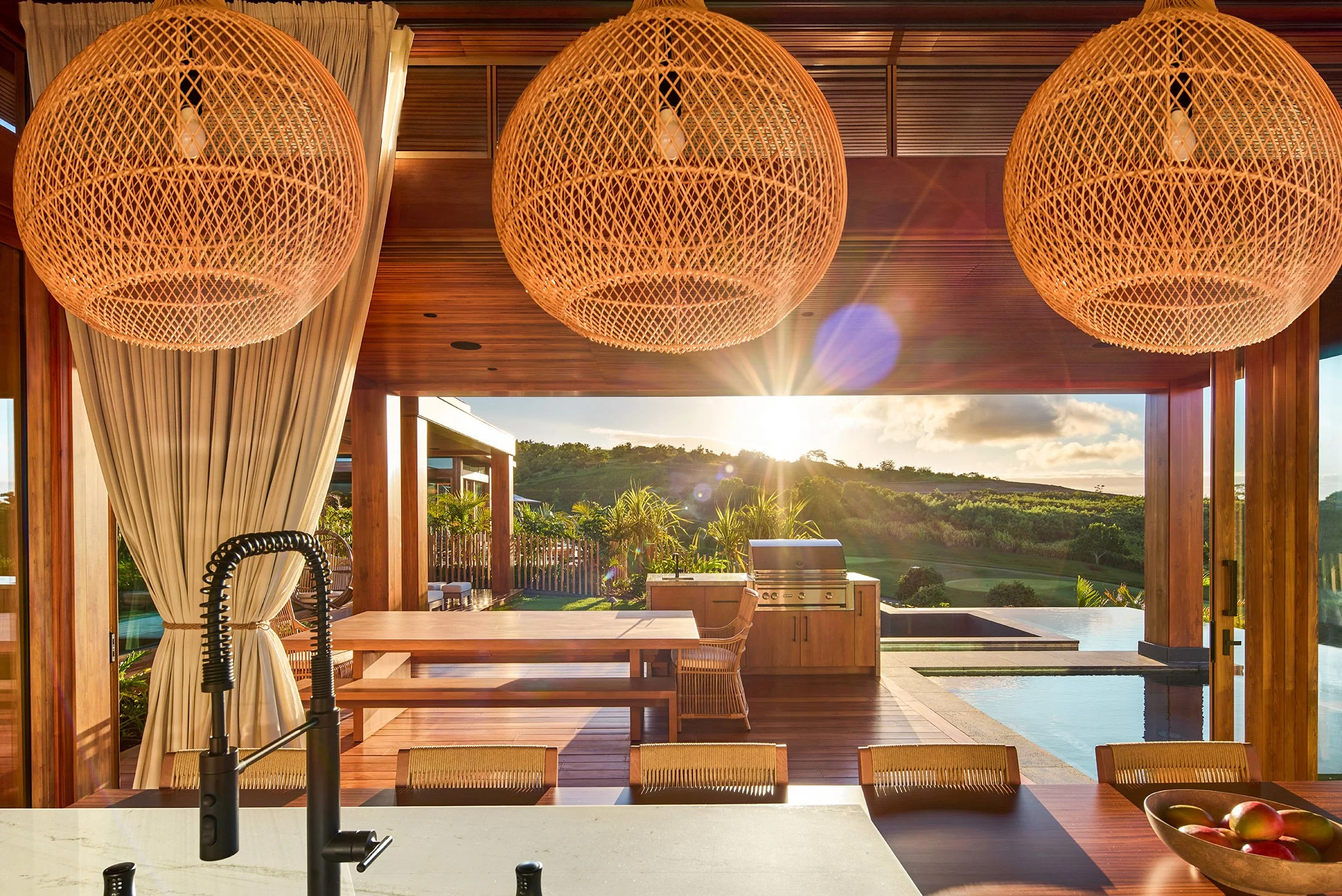
Aepo Nei 18
Nearly an acre on the sand
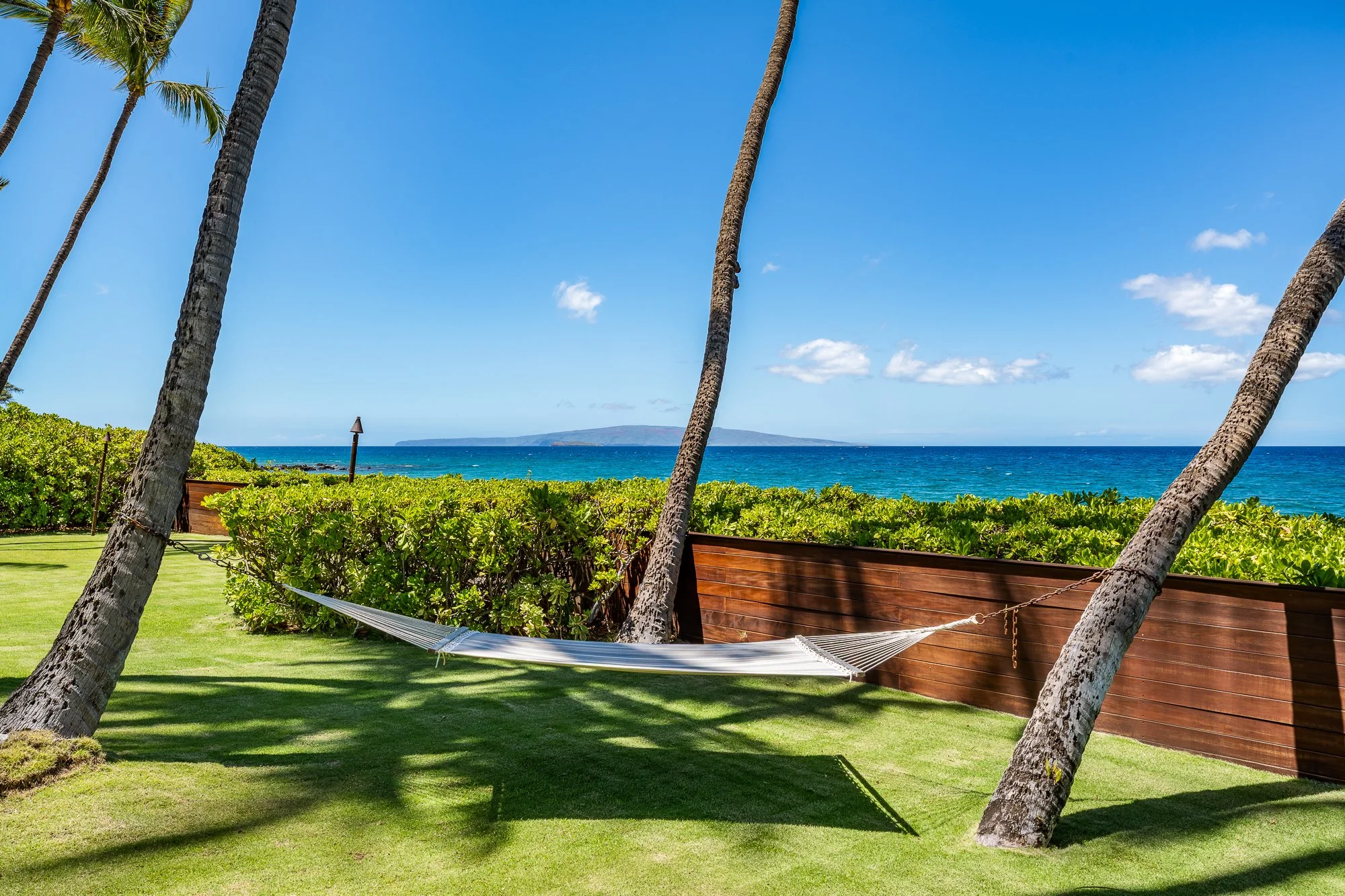
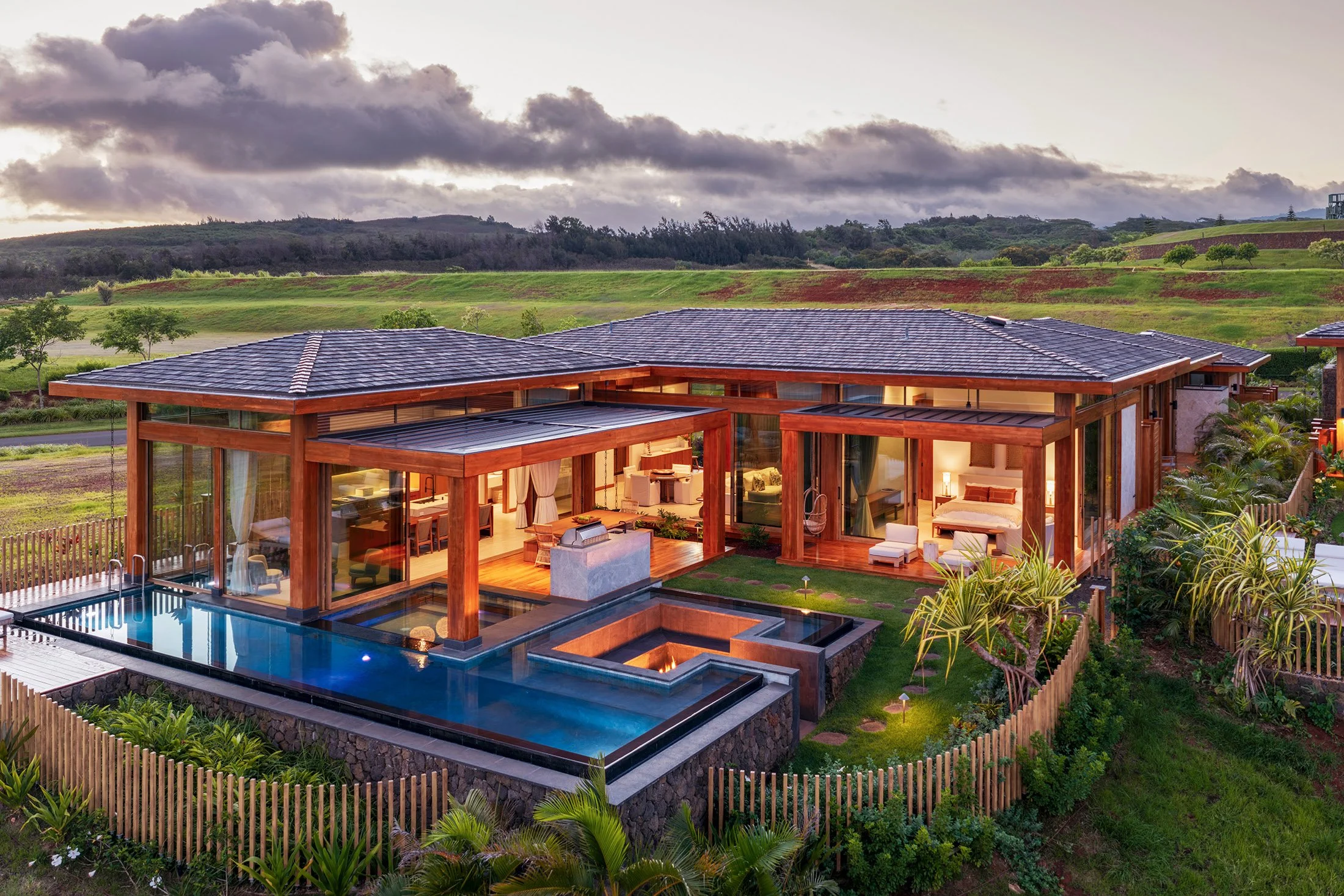
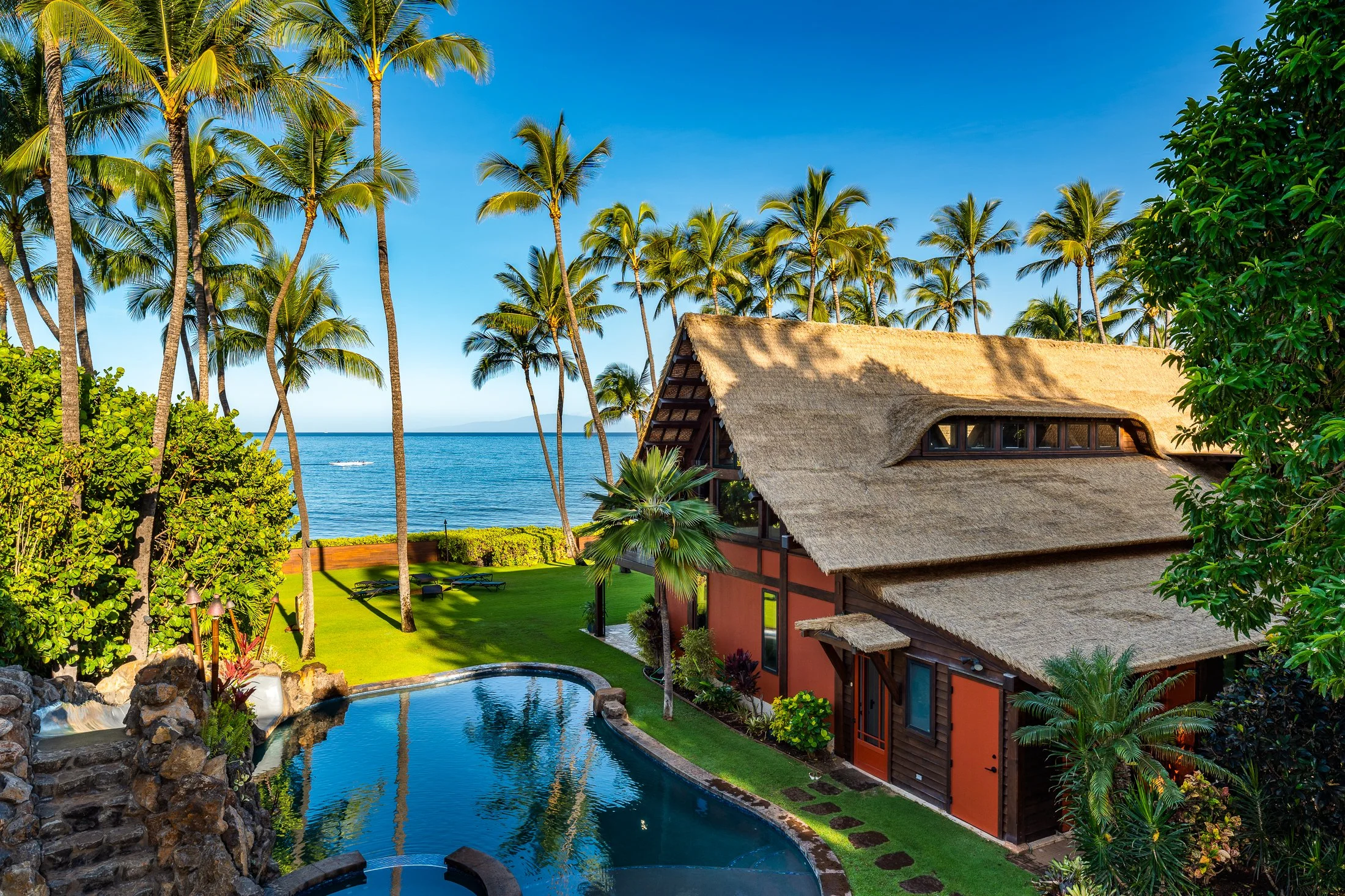
On Keawakapu Beach, nearly an acre meets the sand. The houses sit well back beneath mature coconut palms, with a broad lawn between them and the sand. The acreage gives the two residences room from each other, keeps the architecture off the shoreline, and leaves enough ground for the house to sit inside its landscape. Much of the land is simply left open.
"Facing west towards the explosive Hawaiian sunsets… these thatched roof houses occupy an acre of grass below swaying coconut palms."
-Ike Kligerman Barkley
Twenty-five coconut palms cross the ocean side, some leaning toward the water, others rising well above the roof. The house sits among them. Behind it, a large mango, orange, grapefruit, banana, plumeria, and shower trees grow through a closer garden, and orchids root on the palm trunks. Toward the ocean, the ground is broad and open; turn back and it becomes shaded and enclosed.
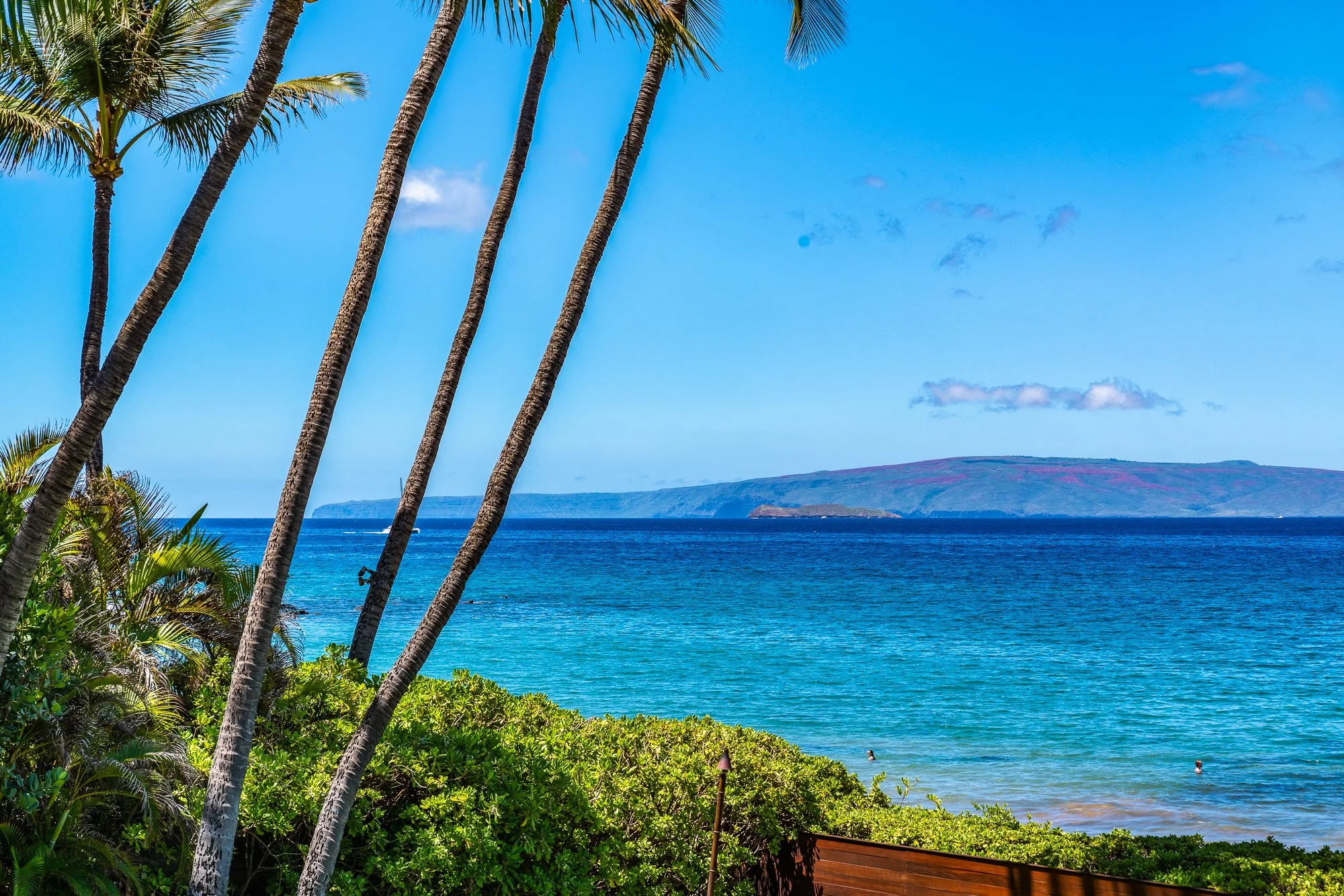
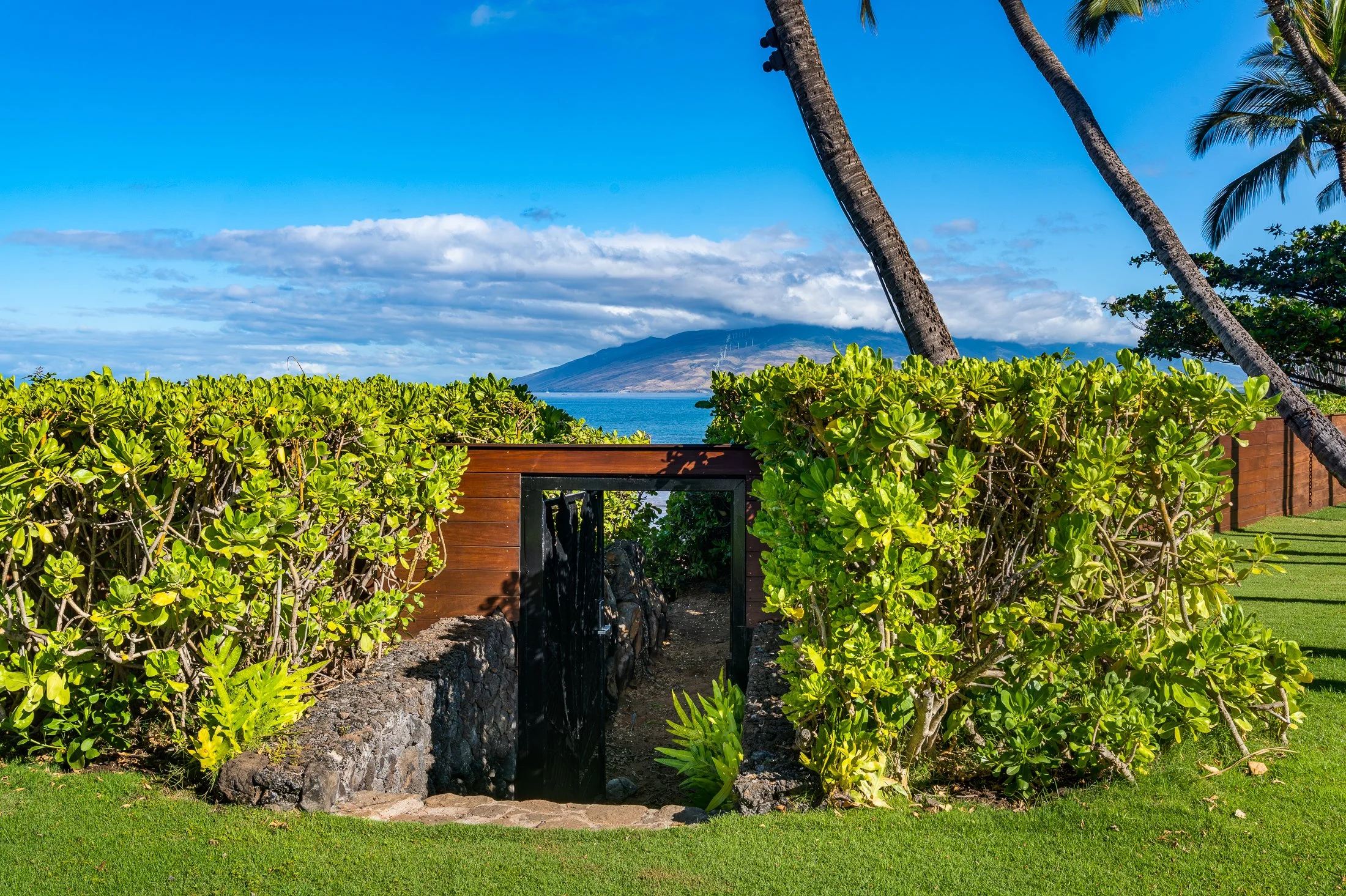
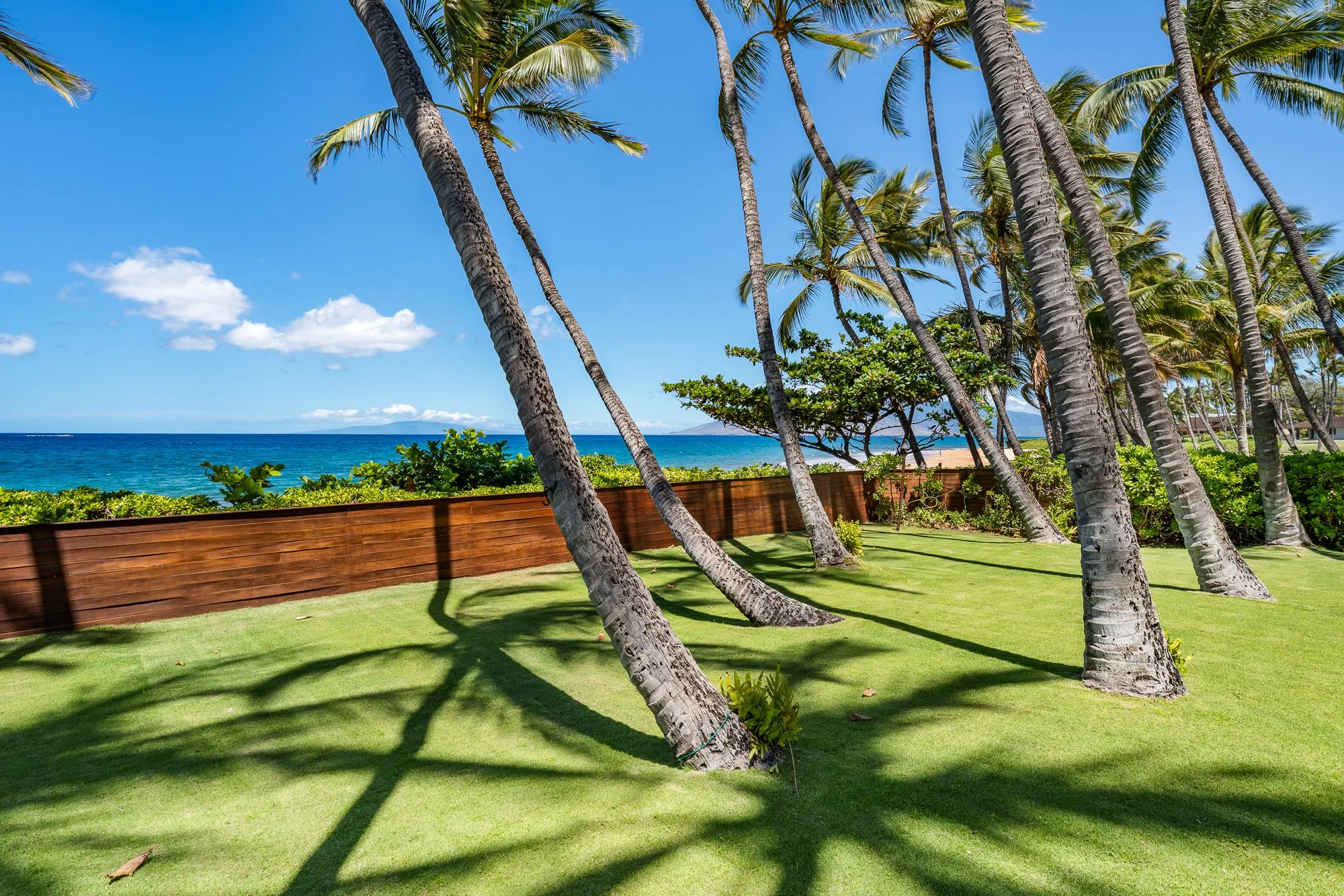
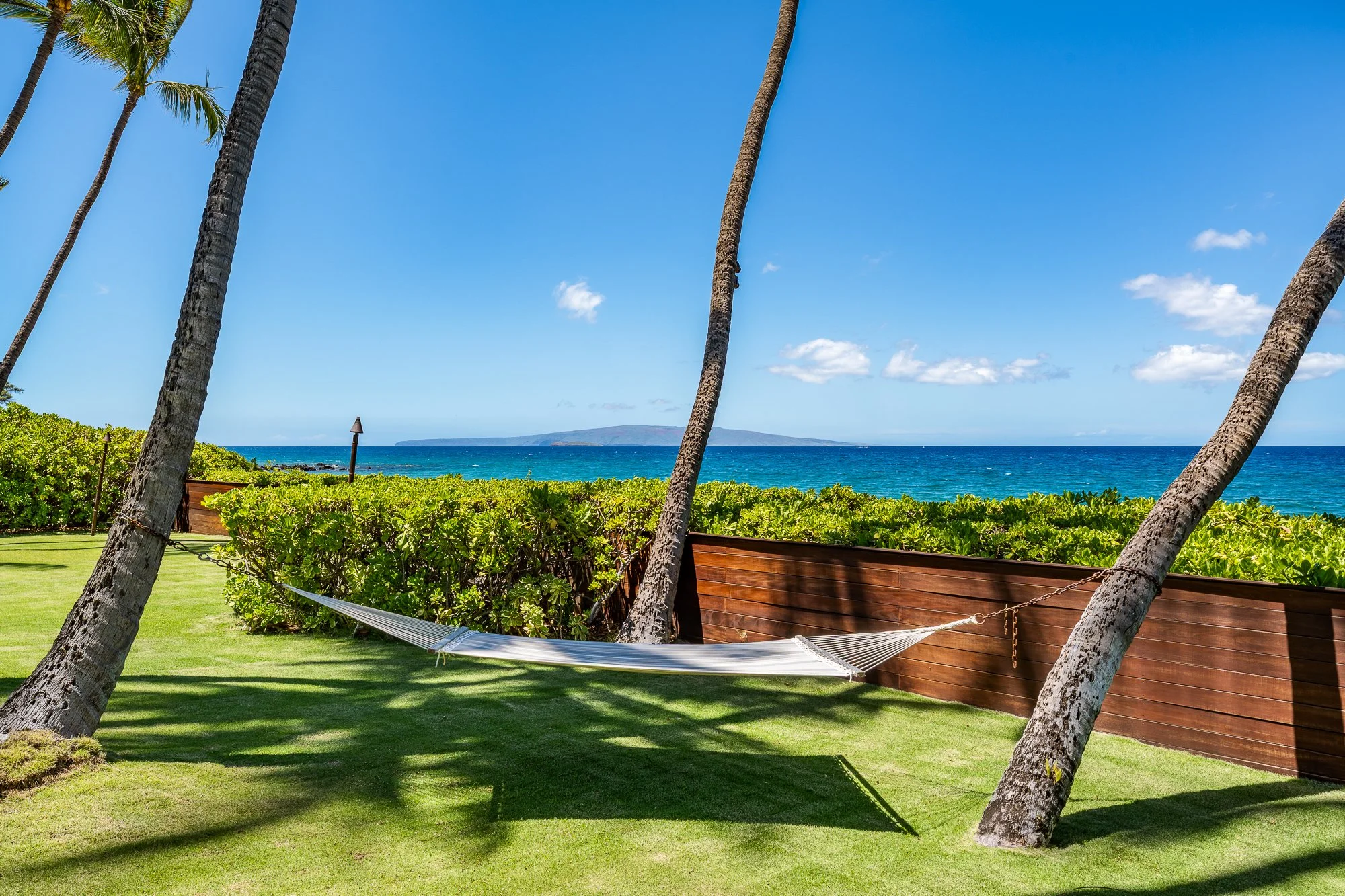
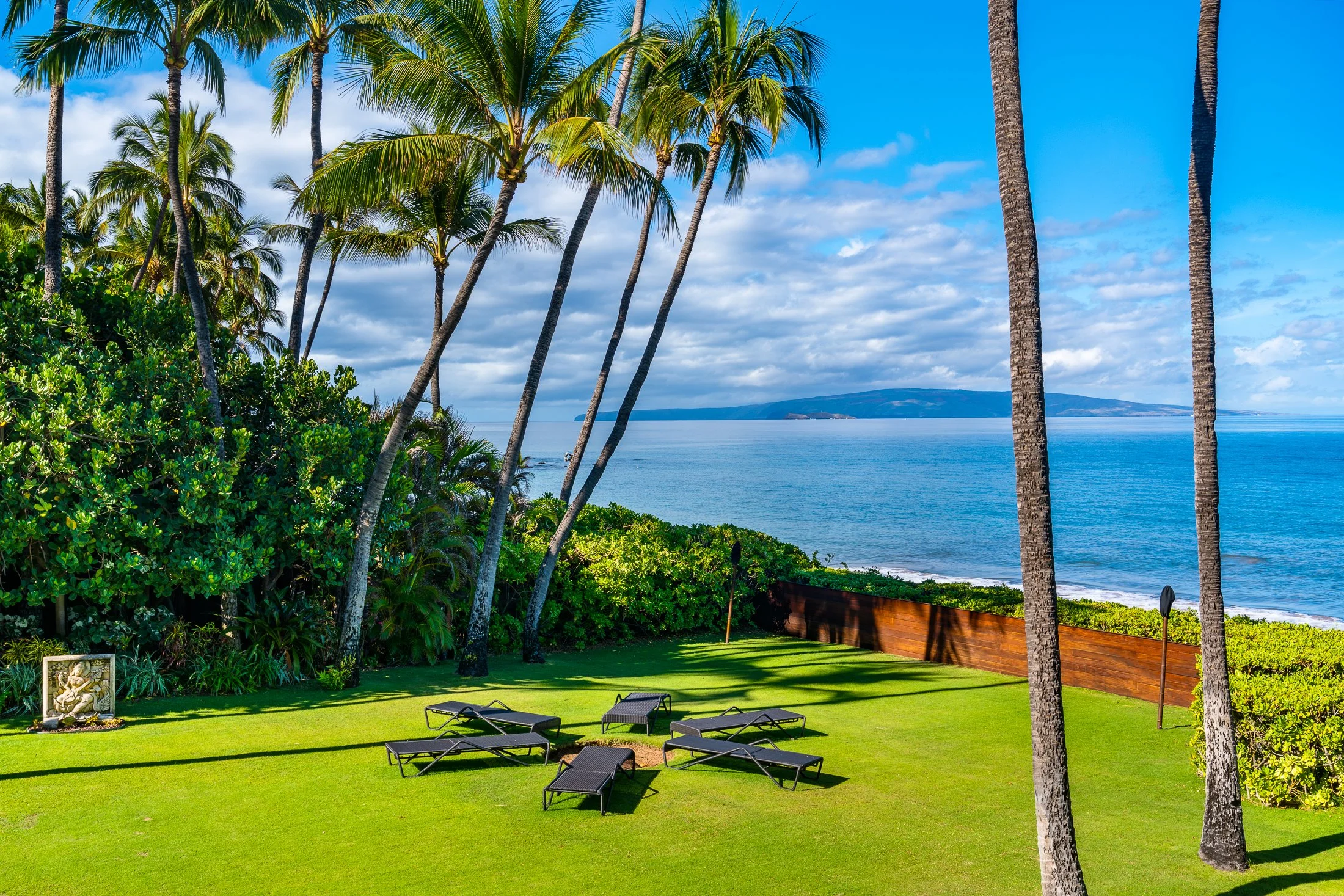
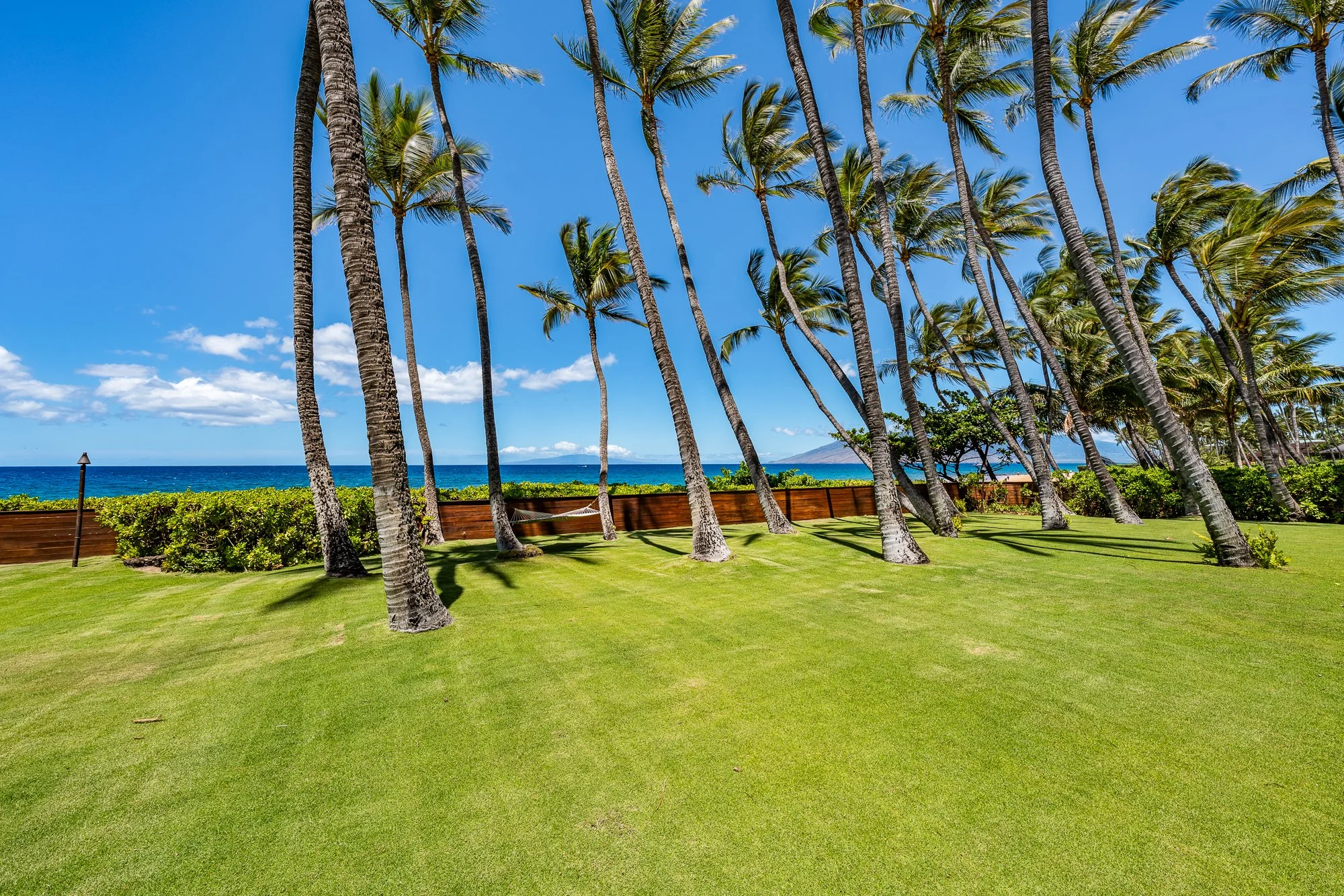
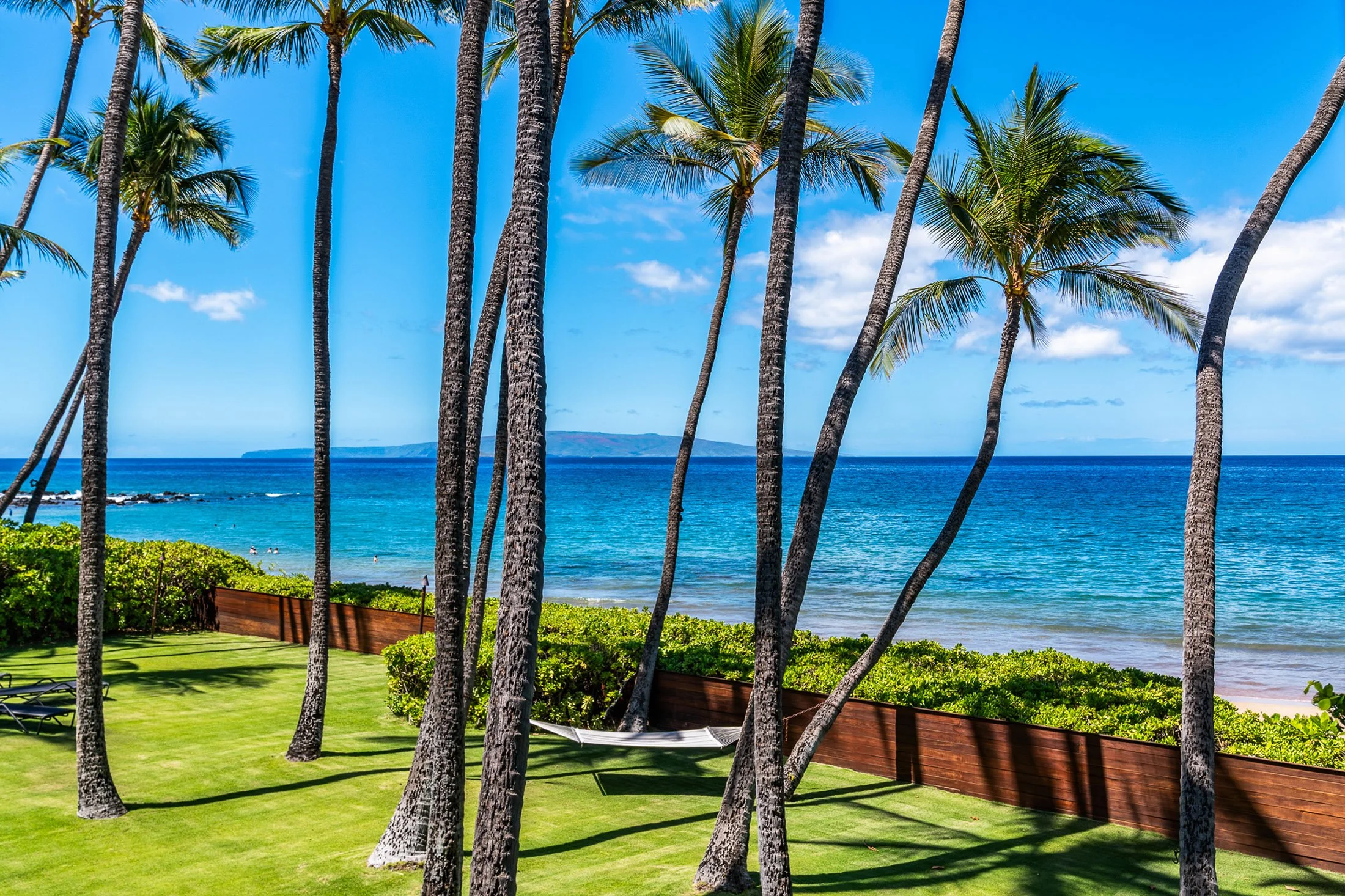
Land on this scale changes what privacy means on a beach. The house opens toward the water from across the lawn. A low timber wall and a clipped hedge mark the edge of the sand, mature planting adds another layer, and the second residence stands in its own place across the grounds. Keawakapu is a few steps past the hedge through a private portal to the beach. The life of the property stays back beneath the palms.
Maui all around
Beyond the property line, the view opens in every direction. Lānaʻi holds the western horizon, with Kahoʻolawe and Molokini offshore. From the end of the lawn and sand, turn back toward Maui and the slopes of Haleakalā rise beyond the roof and trees. The view changes as you move through the grounds, ocean and outer islands one way, mountain and garden the other.
The property faces west, and the sun sets over the water throughout the year. Late in the day, the lawn shows its full length as palm shadows stretch across it. From the lānai, the sequence is grass, palms, sand, water, islands.
Toward the ocean, the property opens. Behind the house, the garden closes in.